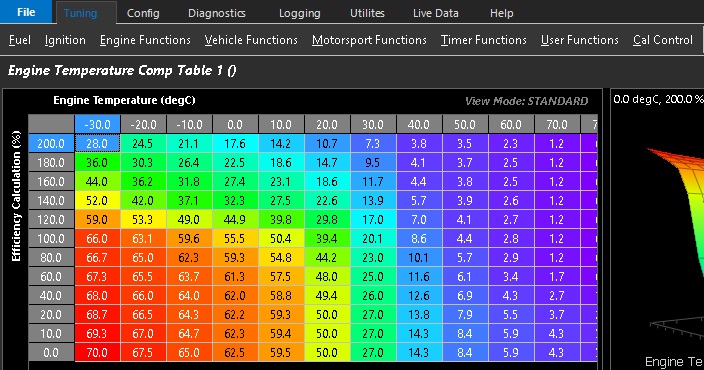
Engine Temperature Fuel Table
Overview
Additional fuel is typically required when the engine is cold to compensate for reduced fuel vaporisation and increased fuel condensation on intake port surfaces, intake valves and cylinder walls.
At low engine temperatures, a portion of the injected fuel does not immediately contribute to combustion. Instead, fuel can form liquid films on engine surfaces, reducing the amount of combustible fuel available within the cylinder. To maintain the desired air-fuel ratio and ensure stable engine operation, additional fuel compensation is required.
As engine temperature increases, fuel vaporisation improves and wall-wetting effects are reduced. The amount of compensation required therefore decreases progressively as the engine approaches normal operating temperature.
Engine load and airflow also influence the amount of compensation required. At higher engine loads, increased air mass flow and air velocity improve fuel atomisation and vaporisation, reducing the amount of fuel lost to wall wetting. As a result, less temperature-based enrichment is typically required at higher loads than at idle or light load conditions for the same engine temperature.
The Engine Temperature Fueling table is used to define this compensation as a function of engine coolant temperature and load (engine air mass flow). Larger corrections are required at low temperatures, gradually reducing to zero additional compensation once normal operating temperature has been reached.
Correct calibration of Engine Temperature Fueling is important for cold start performance, idle stability, throttle response and overall drivability during engine warm-up.
Engine Temperature Warm-up Z-axis Setup
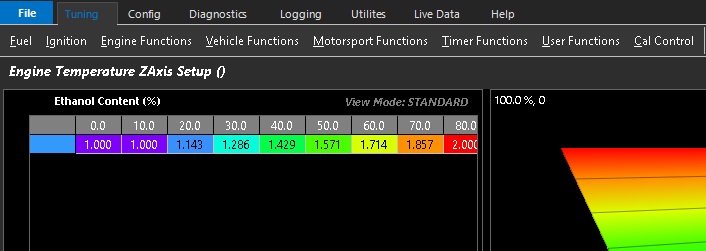
The Z-Axis activates a user definable X-Axis to swap or blend between Engine Temperature Tables 1 and 2 based on the selected runtime. Refer to the supplied sample showing Engine Temperature ZAxis spanned across ethanol content.