Frictional Loss Tables
Overview
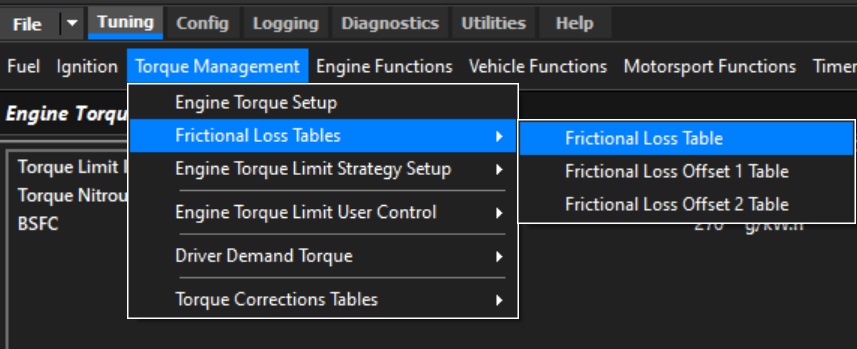
The engine torque produced by combustion is calculated by the ECU and referred to as “Ideal” Engine Torque. The moving parts within the engine have mass and are subject to frictional losses and therefore limit the actual torque available. As such, the estimate of torque required to overcome this drag effect is called Frictional Loss. This estimate is found in the Frictional Loss Table in units of Nm. A default table is provided as a guide to be adjusted (See below)
Frictional loss is instrumental in torque management tuning. If any function in the ECU requires torque targeting, feeding error here will cause the system to not function correctly.
These internal torque losses are mainly influenced by the cylinder count i.e. the more cylinders you have, the more moving parts and therefore more friction & the more parasitic loss of torque.
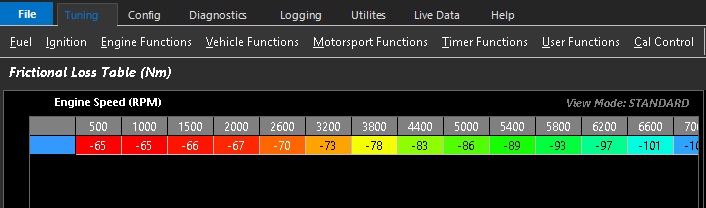
Calibrating Frictional Loss
The engine must be fully mapped and calibrated before editing the Frictional Loss table.
Tuning Tip:
A simple way to obtain a close representation of engine friction is to run the engine in neutral, with no external load on the engine, and adjust the Frictional Loss value at each RPM point until Engine Torque (Uncorrected) is approximately 0 Nm. This represents a condition where the engine is neither accelerating nor decelerating.
i.e. Vary the engine speed in neutral and adjust the Frictional Loss table at each RPM point until Engine Torque (Uncorrected) = 0 Nm.
All the Torque Data can be viewed from the Runtime menu (F3), Torque Data tab.
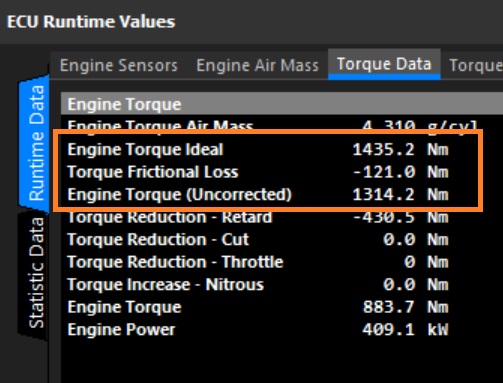
Engine Torque Equation:
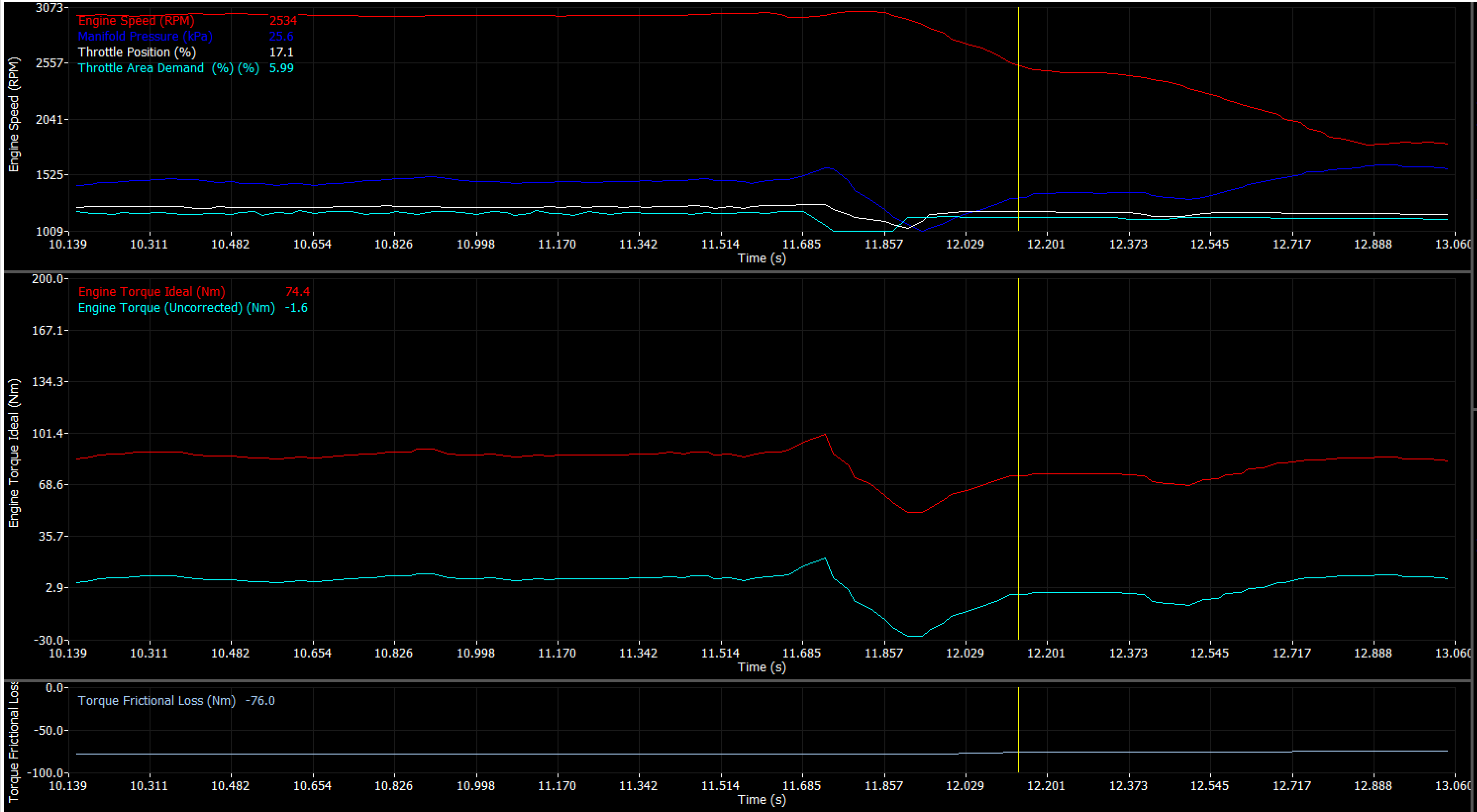
Example:
Torque Frictional Loss = -76.0 Nm, Engine Torque Ideal = 74.4 Nm
Engine Torque Uncorrected = -1.6 Nm
This procedure teaches the ECU how much Ideal Torque is required to achieve different engine speeds. This is instrumental in RPM targeting functions used to achieve or maintain a specific RPM, such as RPM Limiting, Launch Limiting, and other RPM control functions.
Tuning -> Engine Functions -> Torque -> Frictional Loss Table
Frictional Loss Offset Tables
There are two tables that allow offsetting of the frictional loss. One typical example will be adjusting the loss based on oil temperature.

Important Notes:
Engine temperature, oil temperature, and other factors can significantly affect frictional losses. Two offset tables are available to compensate for these factors.
Errors in the Air Mass Model or basic engine setup will cause the calculated base torque values to be incorrect. Before tuning the torque model, ensure there is no significant difference between Lambda Target and Actual Lambda. This provides a useful validation that the Air Mass Model is correctly calculating engine airflow.